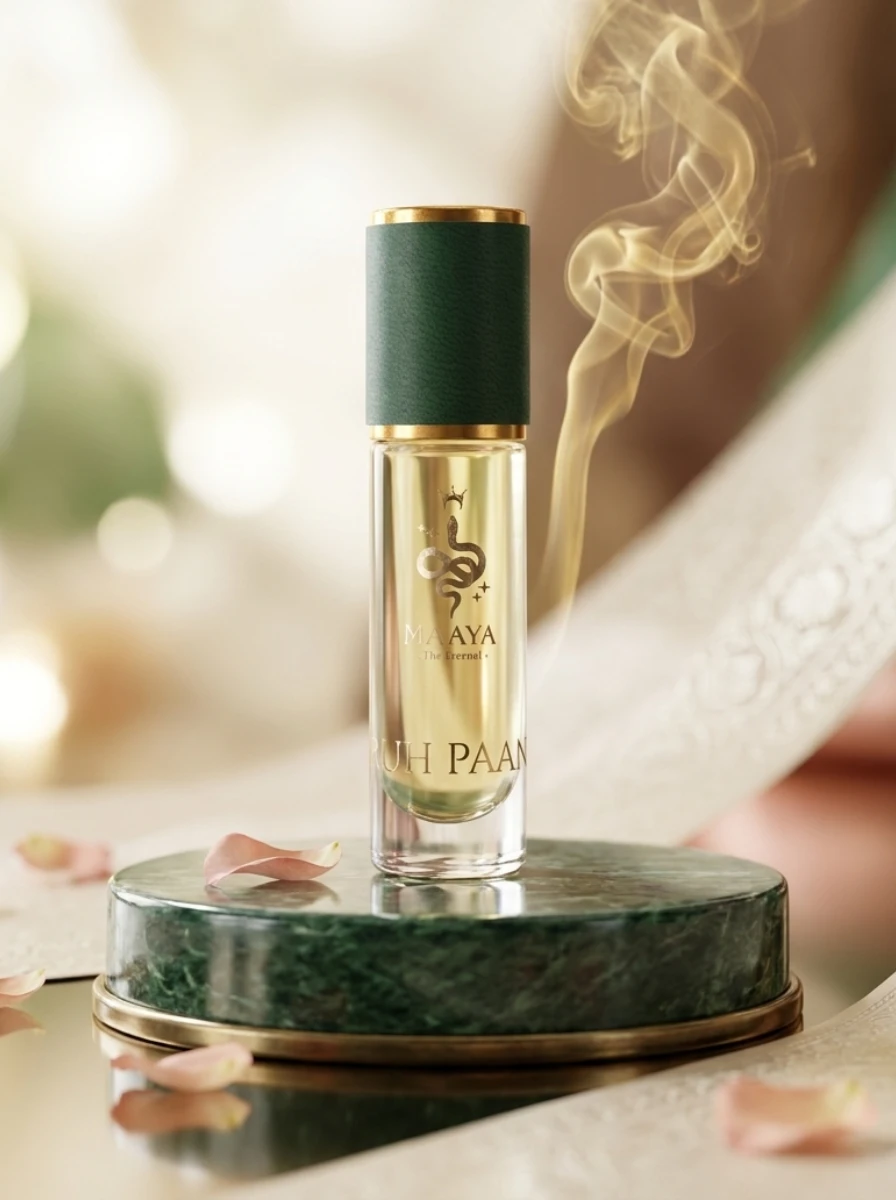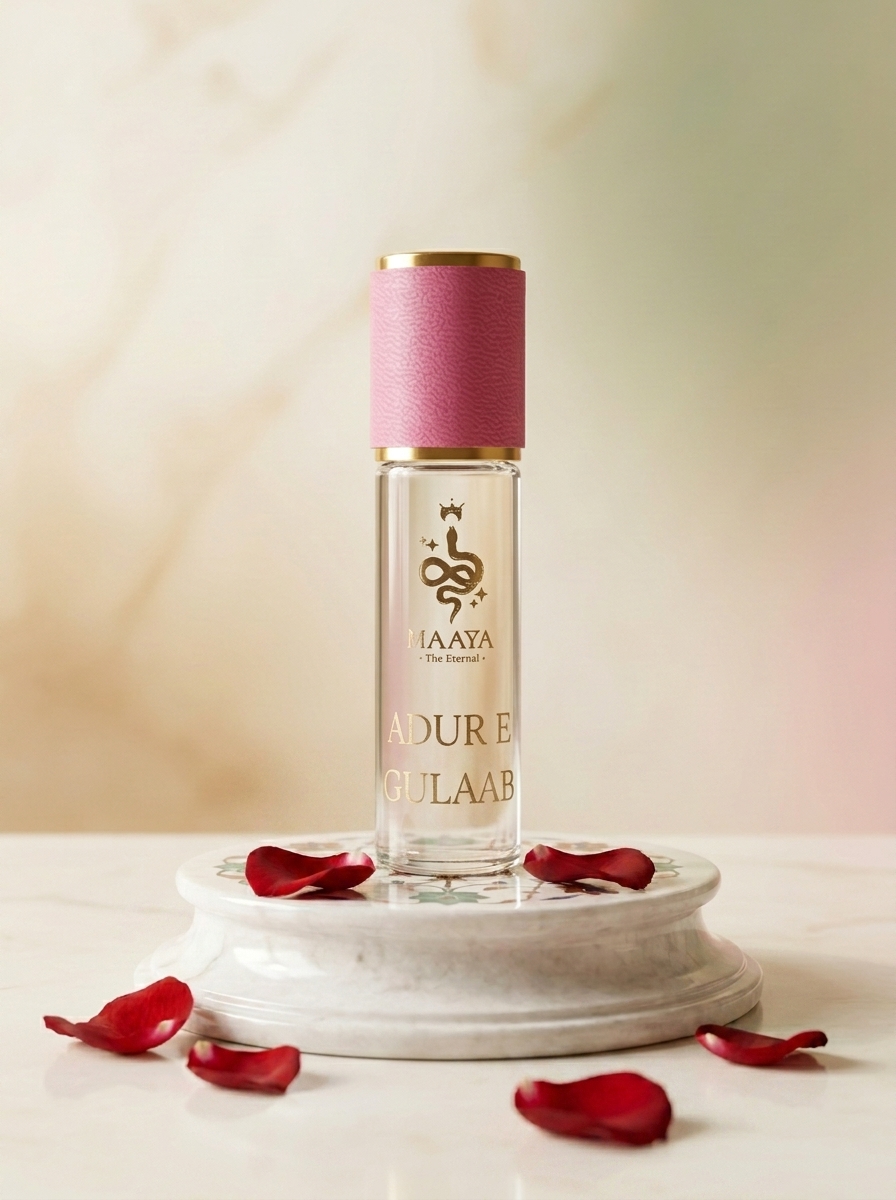

WHAT IS ATTAR? THE ANCIENT PERFUME THE WORLD IS JUST DISCOVERING.
Attar (or ittar) is a natural, highly concentrated, alcohol-free perfume oil derived from botanical sources like flowers, herbs, and spices. Often aged for years, these luxurious oils are meticulously crafted using slow distillation methods and are prized globally for their skin-friendly composition and deep, long-lasting scent.
The Ancient Craft
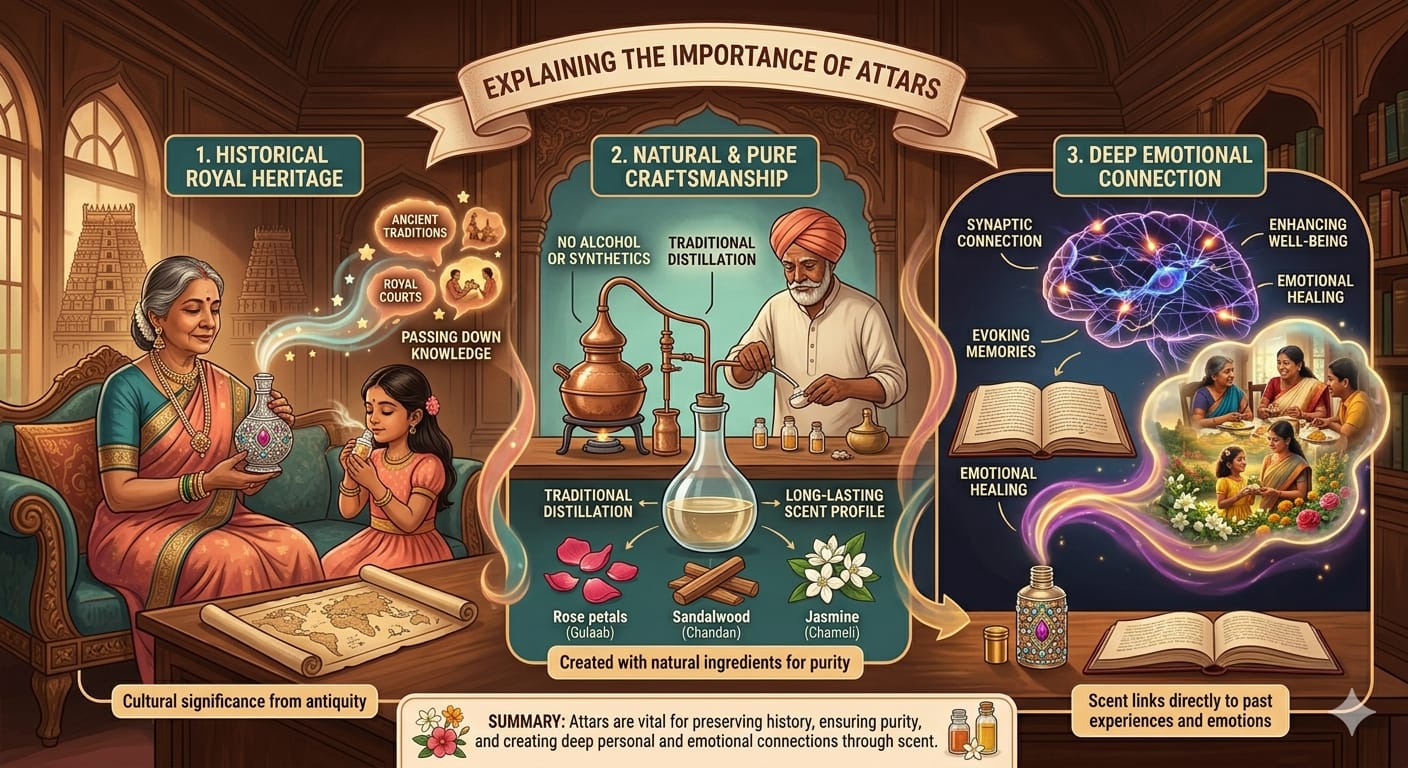
The history of attar spans over millennia, tracing back to ancient Persia, Mesopotamia, and Egypt. The word itself originates from the Persian word itir or Arabic itr, both meaning “perfume” or “scent”.
- The Alchemist’s Touch: In the 10th century, the famous Persian polymath Ibn Sina (Avicenna) revolutionized the fragrance world by perfecting the process of steam distillation to extract oils from roses and other plants.
- The Perfume Capital: In India, attar-making flourished during the Mughal Empire.In India, attar-making flourished during the Mughal Empire. To this day, the city of Kannauj in Uttar Pradesh is globally renowned as the “Perfume Capital of India,” where artisans still use ancient copper stills to produce pure attars.
How Traditional Attar is Made
Authentic attars are made using the centuries-old Deg-Bhapka (hydro-distillation) method.
- Gathering the Botanicals: Tons of hand-picked blossoms (like rose or jasmine), woods (like oud or sandalwood), or spices are placed in a copper deg (still) with water.
- Slow Distillation: The still is heated over a gentle wood or biomass fire. The vapor travels through a bamboo pipe into a bhapka (receiver), which contains a base oil—traditionally rich sandalwood oil.
- Maceration: The base oil absorbs the fragrant steam drop by drop over many hours. This process can be repeated over several days or weeks to achieve a highly concentrated “Ruh” (pure essence).
Why the World is Discovering Attar Now
In an era increasingly focused on clean, sustainable beauty, attars offer a sharp, luxurious contrast to mass-produced, synthetic fragrances.
- No Alcohol or Chemicals: Because they are 100% natural and oil-based, they are incredibly gentle on the skin, making them ideal for individuals who experience dryness or irritation from commercial, alcohol-based perfumes.
- An Intimate Experience: Unlike traditional perfume sprays that project across a room, attars unfold layer by layer as they react with your body heat. They are designed to be personal and long-lasting.
- Spiritual & Therapeutic Roots: Across the Middle East and South Asia, attars have deep spiritual ties. They are utilized for purification, aromatherapy, and daily grooming.
HOW TO USE ATTARS –
Apply a tiny drop of attar to warm pulse points like your wrists, inner elbows, behind the ears, and base of the neck. Gently dab or pat—do not aggressively rub—the oil into your skin so your body heat can properly diffuse the fragrance.
Follow these steps for the best results:
- The Prep
- Start clean: Apply attar after a shower when your pores are open and your skin is free of competing body odors.
- Hydrate: Dab a little unscented moisturizer on your pulse points beforehand. Oil clings to hydrated skin much better, making the scent last longer.
- The Application
- Dispense gently: If your bottle has a dipstick (glass wand) or a roll-on, put a drop or two on your fingertips or directly onto your inner wrist.
- Target pulse points: Press your wrists together lightly, then tap the oil to your inner elbows, the base of your throat, and behind your earlobes.
- Don’t rub: While it is tempting to vigorously rub your wrists together, friction overheats the oil and breaks down the scent’s delicate top notes.
- Beard and hair: Lightly running your scented fingers through the tips of your hair or your beard allows the scent to diffuse subtly as you move.
- Applying to Clothes
- Avoid direct oil contact: Because attar is purely oil-based, applying it directly from the bottle to light-colored garments can leave stains.
The transfer method: Rub the remaining traces of attar between your palms, then gently pat or brush your hands over your shoulders, chest area, or the inner lining of your jacket. The fabric will act as a slow-release wick for the scent.