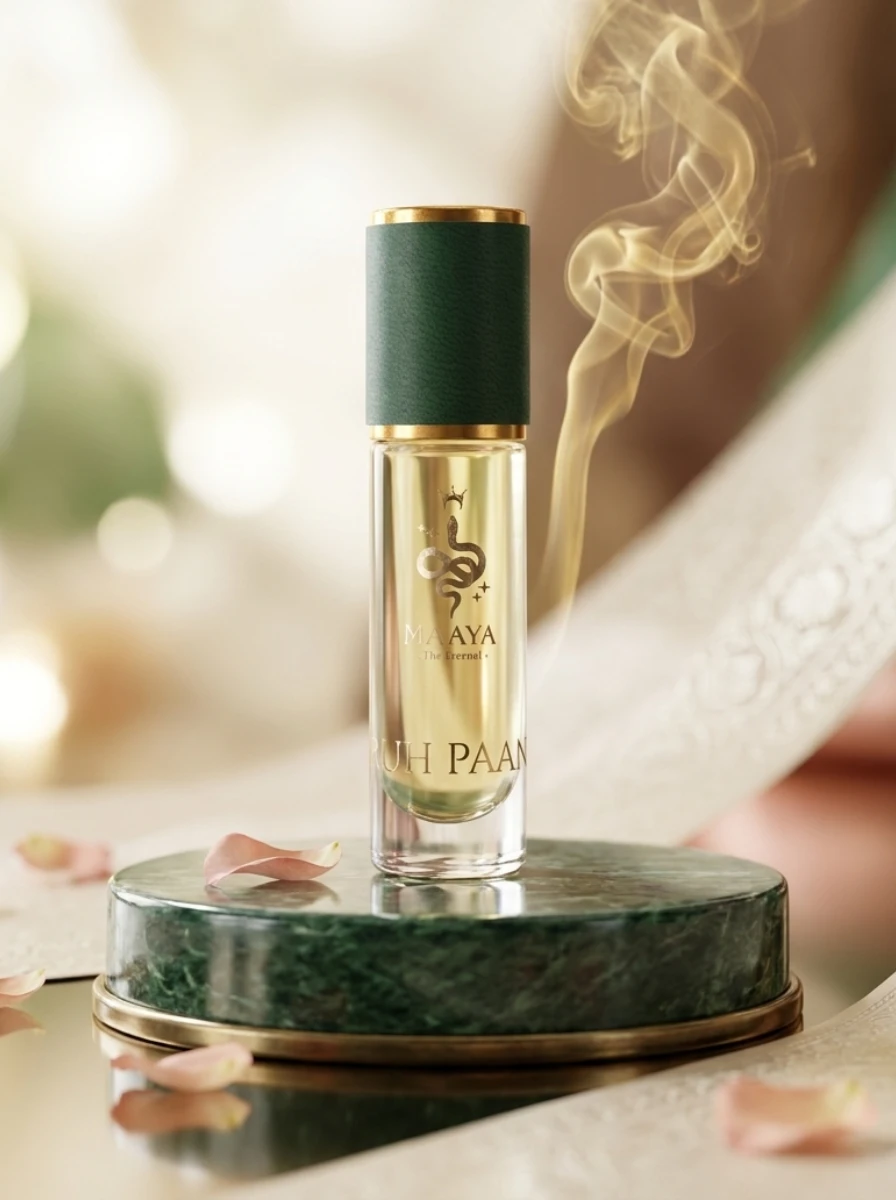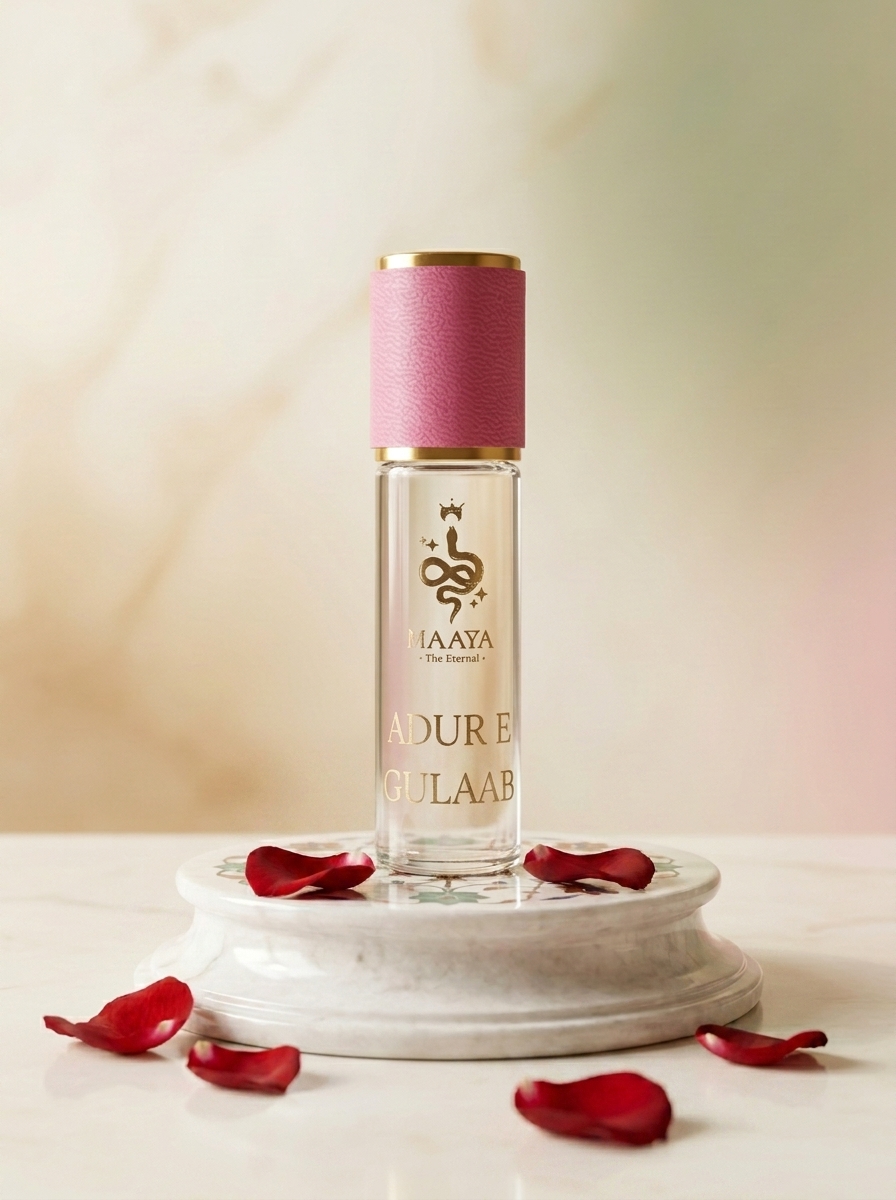

Maaya attars made from The Deg Bhapka method is an ancient, centuries-old hydro-distillation technique used in Kannauj, India, to create pure, alcohol-free attars (natural botanical perfumes). The process relies on patience, copper vessels, a clay-sealed furnace, and a natural base
1. The Deg (The Still) – Freshly picked flowers or natural botanicals are placed into a large copper vessel known as the
Deg. Water is added to the botanicals, and the vessel is placed on a traditional mud furnace (Bhatti) fuelled by wood or cow-dung cakes.
2. The Bhapka & Chonga (Condensation) – The lid of the Deg is tightly sealed with a specialized clay-and-cotton paste to trap the steam
and pressure. A hollow bamboo pipe wrapped in cord, called a Chonga, connects the Deg to the
Bhapka (the copper receiver). The Bhapka rests in a cooling water tank (Gachchi).
3. Trapping the Essence (Distillation) – The fire is lit, and the gentle steam carrying the aromatic molecules travels through the bamboo
pipe into the Bhapka. Inside the receiver, the steam is condensed back into liquid by continually changing the water in the cooling tank.
4. Co-distillation – The Bhapka already contains a fixative, such as pure sandalwood oil or liquid paraffin. As the
fragrant floral water condenses into the Bhapka, the base oil absorbs the scent over days or even weeks of continuous distillation. The resulting liquid is repeatedly poured back and distilled with fresh flowers until the desired fragrance concentration is achieved.
Why This Method is Unique
- Zero Alcohol: The process relies entirely on steam, water, and natural oils, making it completely free of synthetic chemicals or alcohol.
- Maturation: Attars crafted this way behave like fine wine; they do not expire and often improve with age as they mature.
- Geographical Indicator (GI): Because of the centuries of mastery and specific climatic conditions, Kannauj’s Deg Bhapka method is protected by a GI Tag.
To see the traditional Kannauj perfumers gently heating copper pots and sealing vessels in real-
time: